
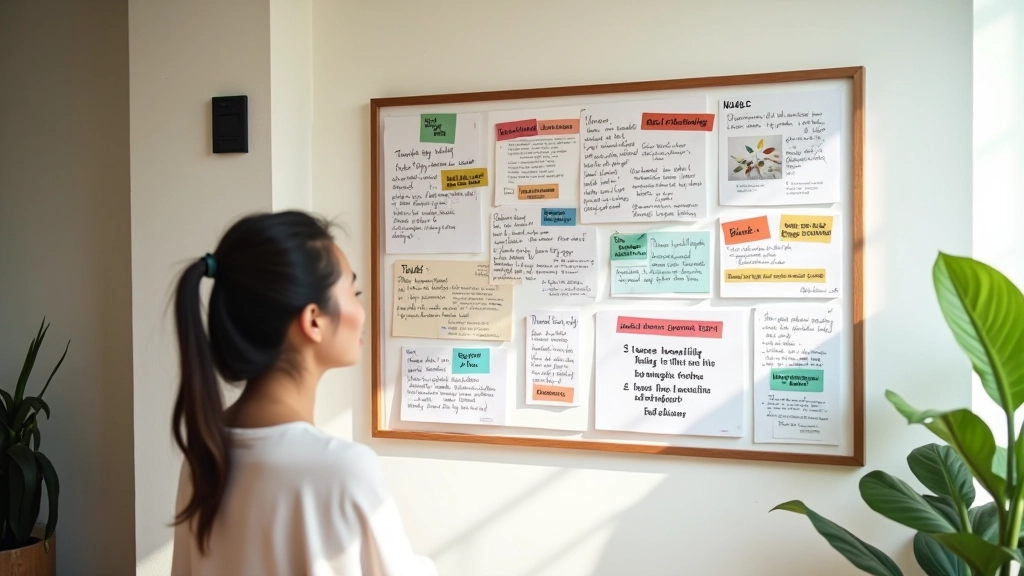
Creating a Visual Goal Board That Actually Works
Turn abstract goals into something you see every day. This guide covers what to include, where to place it, and how to use it as a daily motivation tool.
Read MoreStart with what matters to you, not what looks good on paper. We’ll walk through identifying your core values and building goals that actually feel meaningful.

Most goal-setting starts backward. You hear about what successful people do, what’s trending, what your family expects — and you build around that. It’s exhausting because you’re chasing someone else’s dream.
We’re different here. Your values are the foundation. They’re the things that actually matter to you when nobody’s watching. Family. Honesty. Growth. Security. Creativity. Health. Community. When you build goals from these, they don’t feel like pushing a boulder uphill.
This isn’t about being selfish or ignoring others. It’s about alignment. When your goals match your values, you’ve got motivation that lasts beyond January. You’ll stick with it because it feels right, not because you feel obligated.


Finding your core values isn’t complicated, but it does need reflection. Here’s how we walk clients through it.
Think of 3-5 times you felt genuinely proud, fulfilled, or at peace. What were you doing? Who were you with? What made that moment stick with you? Don’t overthink it — your gut knows.
Did those moments involve helping others? Creating something? Being with family? Having freedom? Learning? You’ll notice patterns. Those patterns are your values showing up.
You don’t need 20 values. Five is enough. Pick the ones that feel non-negotiable. If you had to choose one, what would you defend? That’s a real value.
Educational Framework: This article presents goal-setting strategies for personal development. Individual circumstances vary widely. We recommend adapting these techniques to your specific situation, cultural context, and life stage. When making major life decisions, consider consulting with trusted mentors, family members, or professional coaches who understand your personal context.
Once you’ve named your values, the next move is translating them into real goals. This is where vague intentions become actionable.
Let’s say one of your values is “Family Connection.” That’s beautiful, but it’s not a goal yet. A goal might be: “Have one uninterrupted family dinner per week where phones stay in another room.” Specific. Measurable. Something you can actually do.
Or if your value is “Growth,” your goal could be: “Complete one professional certification in my field within the next 18 months.” You can track progress. You know when you’ve succeeded.
The key is this: your goal should directly support your value. If it doesn’t, you’re drifting back into external pressure territory. Ask yourself — does this goal matter to me, or does it matter to someone else’s idea of who I should be?


Here’s the truth: goals you write down and forget about don’t happen. You need to see them.
This is where a visual goal board comes in. Not Pinterest-perfect — just something you actually look at. Maybe it’s a board in your home office. Maybe it’s a page in your planner. Maybe it’s a note on your bathroom mirror.
Include your top 5 values and 3-5 goals under each one. Add images that represent them. Write them in your own words. The point isn’t decoration — it’s a daily reminder that you’re moving toward something that matters to you.
When you see it regularly, something shifts. Your brain starts noticing opportunities. You make different choices. Small decisions align with your bigger direction. That’s when real progress happens.
You don’t need a perfect plan. You don’t need to have it all figured out. You just need to know what matters to you, and then build from there.
This framework works because it’s honest. It’s about you, not about impressing anyone else. It’s sustainable because you’re not fighting against yourself — you’re moving with your own grain.
Try it this week. Spend an hour with your peak moments. Name your values. Write down three goals. Put them somewhere you’ll see them. See how it feels to be intentional about your direction instead of reactive to what’s in front of you.
That clarity? That’s where everything changes.
Ready to dive deeper into goal clarity work?
Explore Visual Goal Board Strategies